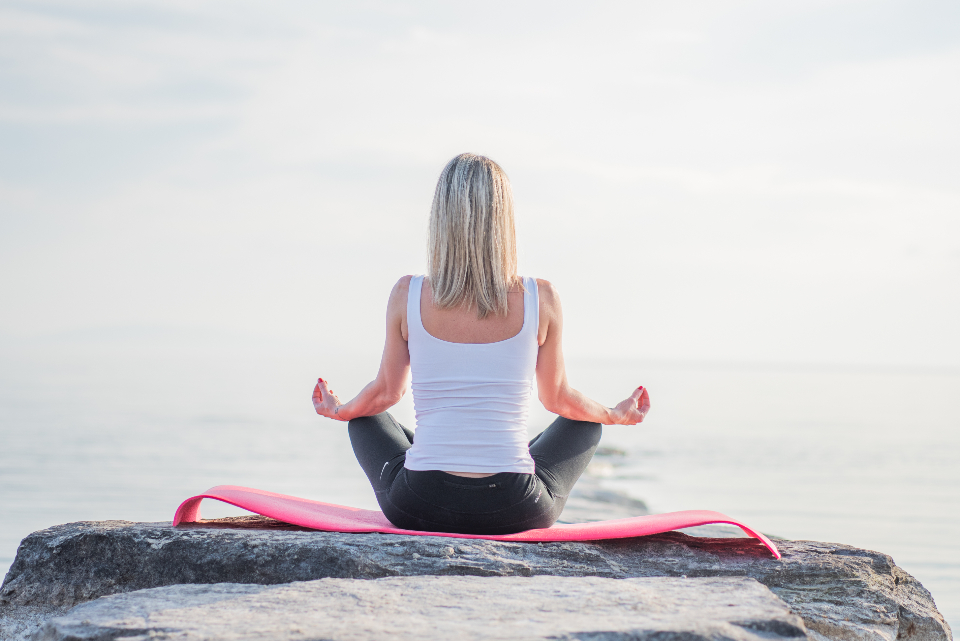
Breathing Is the One Automatic System You Can Steer
Breathing happens without thought, yet it also sits under voluntary control. That dual nature is what makes it genuinely useful rather than merely fashionable: it is a direct handle on a nervous system that otherwise operates entirely below awareness. You cannot decide to lower your heart rate. You can change how you breathe, and your heart rate follows.
Breathwork has accumulated a great deal of overclaiming in recent years, which is unfortunate, because the modest version of the claim is well supported and quite useful on its own.
What Slow Breathing Actually Does
When you lengthen the exhale relative to the inhale, heart rate slows on each out-breath. Repeated over several minutes, this shifts the balance of the autonomic nervous system towards its calming branch and increases heart rate variability, a marker associated with better stress regulation.
The effect is real, measurable, moderate in size, and reasonably quick to appear. It is not a transformation of your baseline state after one session.
- Around six breaths per minute is where most research finds the clearest effect. That is considerably slower than most people breathe at rest.
- The exhale is the active ingredient. Making it longer than the inhale is what matters; elaborate ratios add little.
- Five minutes is enough to notice a change. Longer sessions are not proportionally better, and a practice you will actually repeat beats an ambitious one you abandon.
- Nasal breathing is generally preferable for slow practice, though this matters less than the pace.
Three Patterns Worth Knowing
Extended Exhale
Inhale for four counts, exhale for six or eight. The simplest option, the easiest to sustain, and the one you can use in a meeting or a waiting room without anyone noticing. If you only learn one pattern, learn this.
Box Breathing
Four counts in, hold four, four out, hold four. Its advantage is not physiological superiority but cognitive: the counting occupies attention, which helps when the difficulty is a racing mind rather than a racing pulse. Widely used in high-pressure occupations for exactly that reason.
The Physiological Sigh
Two inhales through the nose — the second short, layered on top of the first — followed by a long exhale through the mouth. This pattern occurs naturally when people are recovering from crying. It acts fast, which makes it a tool for acute moments rather than a daily practice.
Building It Into a Day
Most people who try breathwork treat it as a session to be scheduled, then fail to schedule it. Attaching it to something that already happens works better.
- Before the first task of the working day, rather than after it has already gone badly.
- In transitions — parked in the car before going inside, or between two meetings.
- At the point of noticing, when you catch tension in your jaw or shoulders. The noticing is half the skill.
What It Does Not Do
Breathwork lowers physiological arousal. It does not resolve the situation producing the arousal, it does not process grief, and it is not a standalone treatment for a diagnosed anxiety disorder. Sold as a cure, it sets people up for disappointment and for the conclusion that they have failed at something simple. Presented as one skill among several for managing intensity, it holds up well.
It is also worth saying plainly that calm is not always the appropriate goal. Some situations warrant alarm, and the useful response is to change the situation rather than to regulate yourself into tolerating it.
A Note of Caution
Intense hyperventilation-based methods — rapid, forceful breathing sustained for minutes, sometimes with breath holds — are a different practice with a different risk profile. They can trigger dizziness, tingling, fainting and, in some people, panic. Anyone with a respiratory or cardiac condition, a history of seizures, or who is pregnant should speak with a clinician first, and should never practise in water.
Slow breathing at a comfortable depth carries very little risk for most people. If a pattern makes you feel worse, the correct response is to stop and return to ordinary breathing, not to push through.
The real value of breathwork is that it is free, portable, and available in precisely the moments when other tools are not. That is a reasonable claim, and it does not need to be inflated to be worth learning.
How to Tell Whether It Is Working
Because the effect is moderate rather than dramatic, people often practise for a fortnight, notice nothing obvious, and stop. It helps to know what a real result looks like.
- Within a session: shoulders drop, the jaw unclenches, the urge to check your phone weakens. This is the immediate effect and it should be noticeable by the third or fourth minute.
- Across weeks: the useful change is not that you feel calm more often, but that you recover faster after something knocks you off balance. That is the marker worth watching.
- What is not a good measure: whether you managed to stop thinking. Thoughts continuing is normal and not a sign of failure.
If you want something more objective, most wearables now report resting heart rate and heart rate variability. Neither is precise enough to judge a single session, but a trend across a month is informative.
Why It Fails for Some People
A minority find that turning attention inward increases anxiety rather than reducing it. Focusing on the breath draws attention to bodily sensation, and for someone whose anxiety is centred on bodily sensation, that can amplify rather than settle things.
If that describes you, an external anchor usually works better — naming objects in the room, walking while counting steps, or holding something cold. The goal is the same and the route is different. This is a known pattern, not an indication that you are doing it wrong.