Key takeaway: Sleep anxiety triggers a physical stress response, releasing cortisol that blocks melatonin and prevents rest. To break this cycle, use the 20-minute rule, leaving the bed if sleep doesn’t occur, and diaphragmatic breathing to stimulate the vagus nerve. If symptoms persist three nights weekly for three months, professional CBT-I is the recommended clinical gold standard for recovery.
Nearly 30% of adults experience chronic insomnia, often triggered by a surge of cortisol that blocks the body’s natural transition into deep rest. Why does the brain choose the moment you hit the pillow to replay every stressor, and how can you regain control over this biological hijack?
The silence of the night often forces our focus inward, turning minor worries into physical hyperarousal that prevents sleep onset. We will break down the science of the vagus nerve and provide actionable techniques to silence the nocturnal racing mind once and for all.
- Why Anxiety Falling Asleep Happens and How It Affects the Body
- Biological Triggers and the Bidirectional Sleep-Anxiety Cycle
- 3 Techniques to Calm the Nervous System Before Bed
- Establishing a Sustainable Routine for Lasting Sleep Quality
Why Anxiety Falling Asleep Happens and How It Affects the Body
Sleep anxiety triggers cortisol spikes, suppressing melatonin and causing heart palpitations or nocturnal panic. Managing this requires vagus nerve stimulation and strict 20-minute bed-exit rules to prevent physical hyperarousal symptoms.
Transitioning from the daily rush to total stillness often reveals how stress physically grips the body before rest.
Physical Symptoms of a Racing Mind at Night
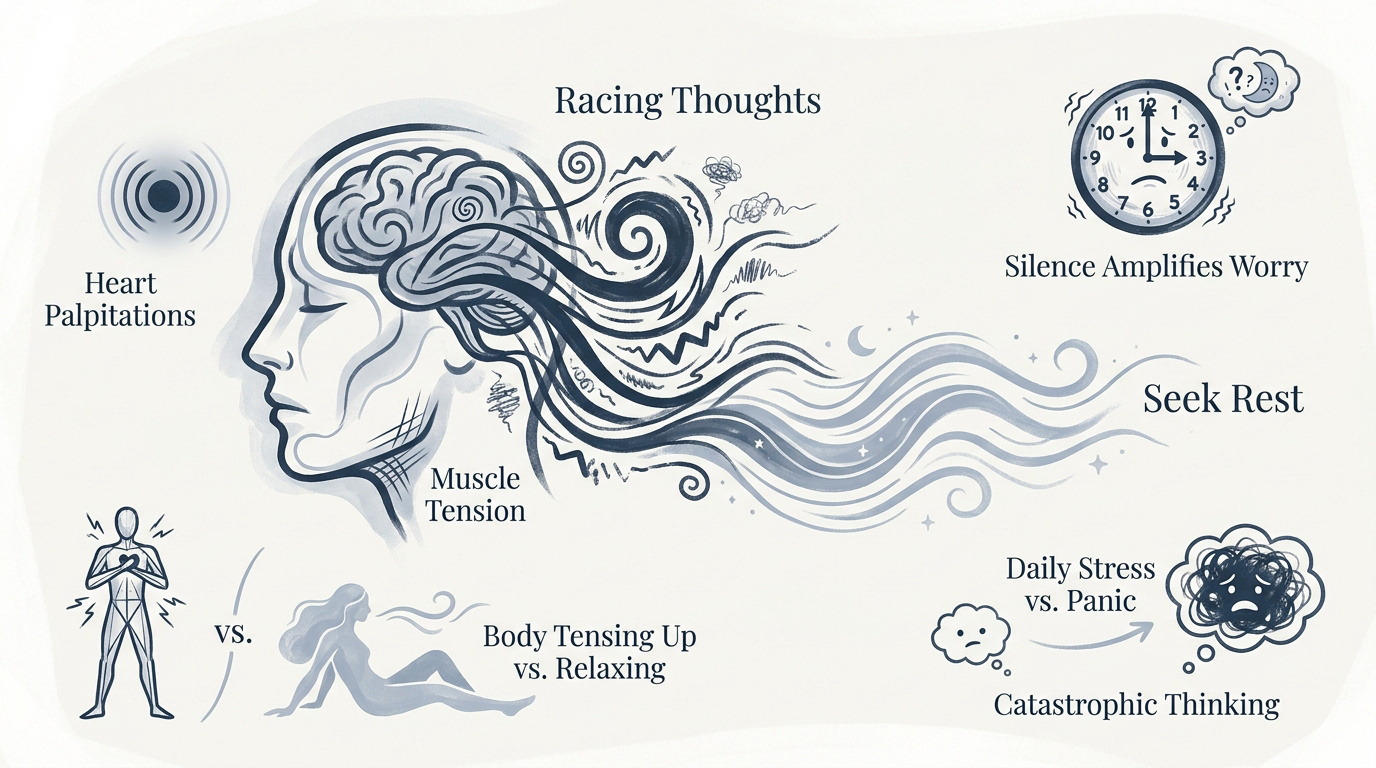
You might feel sudden heart palpitations or a crushing chest tightness. These jolts often mimic a panic rush just as you drift off. It feels like a shock to the system, appearing without any warning.
Muscle tension locks your body into a rigid state. Your jaw clenches tightly, and your shoulders remain hunched and stiff.
This differs from simple fatigue. You feel a restless urge to move, making staying still impossible.
Why Nighttime Silence Amplifies Internal Worry
Without daily noise, your focus naturally turns inward. The brain lacks external sensory input to process right now. Consequently, it starts chewing on internal anxieties instead of relaxing.
Your mind misinterprets this silence as a signal for vigilance. Evolutionarily, quiet environments often signaled hidden danger. This instinct triggers a state of high alert that kills sleep.
Catastrophic thinking thrives in the dark. Small issues feel life-threatening at 3 AM.
Distinguishing Between General Worry and Nocturnal Panic
Daily stressors are usually manageable during the afternoon. Clinical nocturnal panic attacks are different, involving intense terror and severe physical distress. They hit harder and feel much more dangerous.
Identify sleep onset disorders by looking for recurring fear patterns. Note how frequently these episodes occur each week. Consistency is the main red flag here.
Intensity matters most. Seek professional help if panic prevents you from getting any rest at all.
Biological Triggers and the Bidirectional Sleep-Anxiety Cycle
While the mind races, the body’s internal chemistry is often the silent culprit driving this nocturnal restlessness.
How Cortisol and the Vagus Nerve Influence Arousal
The sympathetic nervous system triggers hypervigilance. It maintains alertness when you need rest. This is the “fight or flight” response.
Low vagal tone contributes to hyperarousal. The vagus nerve should calm you down. If weak, the body stays stressed.
High stress hormones block sleep signals. Cortisol directly interferes with melatonin.
Impact of Hormonal Shifts and Perimenopause on Rest
Estrogen and progesterone fluctuations trigger nighttime distress. These changes disrupt the brain’s thermostat. Sleep becomes fragmented and shallow.
Waking up soaked causes immediate panic. Physical symptoms like night sweats link to psychological anxiety. The heart starts racing instantly.
Hormonal insomnia affects many women. It requires specific lifestyle adjustments.
The Role of Blue Light and Circadian Rhythm Disruption
Screen exposure suppresses the natural sleep signal. Blue light mimics daylight to the brain. Melatonin production stops immediately.
Late-night scrolling confuses your internal rhythm. Digital habits conflict with biological clocks. The body loses its sense of time.
Inconsistent wake times damage mood regulation. This stems from long-term effects on brain chemistry.
3 Techniques to Calm the Nervous System Before Bed
Understanding the biology is only half the battle; now we must apply practical methods to override these stress signals.
Diaphragmatic Breathing and Vagus Nerve Stimulation
Start by inhaling slowly through your nose. You must expand your abdomen rather than your chest. Then, exhale for a longer duration than the inhale. This simple mechanical shift is surprisingly effective.
Deep breathing signals safety to your brain. It manually activates the parasympathetic system. Consequently, your heart rate drops quickly.
Controlled respiration also reduces core temperature. This physiological cooling effect facilitates rest.
Psychological Shifts to Break the Bed Stress Association
Apply the 20-minute rule for leaving the bed. If you remain awake, get out of the room. Do not stay and struggle. This prevents negative conditioning.
The bed must only mean sleep. Stressing in bed makes the environment a trigger for vigilance. Decouple the space from your frustration.
Engage in low stimulation activities elsewhere. Read a boring book. Keep lights very dim.
Natural Aids and Supplements Without Dependency Risks
Chamomile and valerian root offer mild sedation. They help establish a relaxing nightly ritual. These herbal options are safe for regular use.
Magnesium helps regulate neurotransmitters that calm the brain. It assists muscle and mind relaxation. Many people are actually deficient in this mineral.
These natural supports do not cause morning grogginess. They lack the risks of heavy medication. The Anxious Mind at Night: Why Sleep Onset Is Hard and What Helps often requires these gentle interventions.
Establishing a Sustainable Routine for Lasting Sleep Quality
Beyond immediate relief, building a long-term framework is essential for preventing the return of nighttime dread.
Bedtime Reset Checklist for Middle of the Night Waking
Keep the room cool and dark. Check if pets are disturbing you. Move them if necessary for rest.
Checking the time increases anxiety. It starts a mental countdown to morning. Hide the display.
Focus on sensory comfort. Use weighted blankets or soft sounds.
Cognitive Behavioral Therapy for Insomnia and Professional Options
CBT-I restructures negative thoughts. It targets the fear of not sleeping. This therapy changes your mental habits. It is highly effective long-term.
Addressing the root cause provides relief. Talk therapy helps process daily stress. Sometimes sleep is just a symptom.
Outline clinical sleep studies. These rule out physical apnea or movements.
When to Transition from Self Care to Medical Consultation
Define the 3-3-3 rule for chronic issues. This means trouble three nights a week. It lasts for three months. It affects three life areas.
Extreme daytime fatigue is a sign. If self-care fails, see a doctor. Safety should always come first.
Prepare for the doctor visit. Keep a sleep diary for data.
Managing sleep anxiety requires calming the nervous system through vagus nerve stimulation, strict 20-minute bed-exit rules, and consistent sleep hygiene. By regulating cortisol and retraining your brain, you can reclaim peaceful nights. Start these techniques tonight to transform your rest and wake up feeling truly restored.
FAQ
Why does my mind start racing as soon as I try to fall asleep?
This phenomenon occurs because the silence of the night removes the external distractions that occupy your brain during the day. Without sensory input to process, your mind turns inward, often amplifying worries and doubts. From an evolutionary perspective, your brain may misinterpret this silence as a need for vigilance, triggering a state of high alert that makes small problems feel life-threatening.
Biologically, your cortisol levels and circadian rhythm play a role, as the lack of daily “mental buffers” leaves you vulnerable to catastrophic thinking. This hyperarousal keeps the sympathetic nervous system active, preventing the relaxation necessary for sleep onset.
What are the physical signs of nighttime anxiety and sleep dread?
Sleep-related anxiety often manifests through heart palpitations, chest tightness, and rapid, shallow breathing. You might experience sudden jolts of panic or a “rush” of terror just as you are transitioning into sleep. These physical symptoms are driven by the body’s “fight-or-flight” response, which releases stress hormones that counteract the natural sleep signals.
Other common indicators include involuntary muscle tension, such as jaw clenching or shoulder stiffness, and a general inability to stay still. Unlike normal tiredness, this state leaves the body physically primed for a threat, making it impossible to achieve a restful state.
How can I tell the difference between normal daily stress and a nocturnal panic attack?
Daily stress is generally manageable and tied to specific life events, whereas a nocturnal panic attack is a sudden, intense episode of terror that occurs during sleep or at sleep onset. These attacks involve severe physical distress, such as a sensation of choking, sweating, or trembling, and typically last between 10 and 60 minutes.
While daily worries might keep you awake thinking, a panic attack feels like a brutal physical crisis. If these episodes are recurring and cause intense fear of the night itself, it is important to distinguish them from standard insomnia to seek the correct therapeutic approach.
What is the “20-minute rule” for managing sleep onset anxiety?
The 20-minute rule is a stimulus control technique designed to break the association between your bed and the feeling of anxiety. If you are unable to fall asleep after approximately 20 minutes, you should get out of bed and leave the room. Staying in bed while stressed conditions your brain to view the sleep environment as a place of struggle.
Once out of bed, engage in a low-stimulation activity, such as reading a boring book under dim light, until you feel truly sleepy. You should only return to bed when your body is ready to rest, ensuring the bed remains a sanctuary for sleep rather than a zone for worry.
How do hormones and blue light affect my ability to fall asleep?
Hormonal shifts, particularly fluctuations in estrogen and progesterone during perimenopause, can disrupt the brain’s internal thermostat and cause night sweats, which trigger immediate physical anxiety. Simultaneously, exposure to blue light from screens suppresses melatonin production, the hormone responsible for signaling sleep to your brain.
This combination creates a bidirectional cycle where biological triggers and digital habits confuse your circadian rhythm. When melatonin is blocked and stress hormones are elevated, the body loses its sense of time, leading to fragmented and shallow sleep.
When should I seek professional help for my sleeping difficulties?
You should consult a medical professional if you meet the 3-3-3 rule: experiencing sleep troubles at least three nights a week, for at least three months, and finding that it affects three major areas of your life, such as work, mood, or social relationships. Persistent fatigue and difficulty concentrating are significant red flags.
Professional options like Cognitive Behavioral Therapy for Insomnia (CBT-I) are highly effective for restructuring the negative thoughts that fuel sleep dread. A doctor can also rule out underlying medical conditions, such as sleep apnea, or discuss the short-term use of aids like melatonin or magnesium supplements.