
Key takeaway: Patient Access Representatives serve as the vital link between clinical care and financial stability. By mastering EMR systems and insurance verification, these professionals ensure smooth clinic flow and revenue integrity. This role offers a strategic entry into healthcare, where earning a CHAA certification can support career mobility and professional advancement in patient access.
Patient access representatives are the engine of modern healthcare, managing the critical intersection between clinical care and financial operations. With medical billing errors often stemming from the very first point of contact, the accuracy of data entry in EMR systems is a high-stakes responsibility that directly impacts patient safety and clinic revenue.
Errors during insurance verification can contribute to denied claims or delayed treatments for those in need. We will explore the daily realities of patient access jobs, the essential skills required for success, and how you can build a stable career in this vital healthcare sector.
- What Patient Access Jobs Really Entail in 2026
- 3 Key Realities of the Daily Clinic Hustle
- How to Break Into Healthcare Without a Degree?
- Salary Perks and Long-Term Career Mobility
What Patient Access Jobs Really Entail in 2026
Patient Access Representatives bridge clinical care and finance by managing insurance verification, patient registration, and co-pay collection. These roles require a high school diploma and proficiency in EMR systems to maintain clinic flow and regulatory compliance.
This essential coordination ensures every medical visit starts on solid ground, moving patients efficiently from the lobby to the exam room.
The Front-Line Reality of Patient Registration
As the face of the facility, you are the first point of contact. Beyond a professional greeting, you manage registration protocols that set the tone for the entire healthcare experience. Professionalism here is non-negotiable.
Accuracy is your best friend. You must enter demographic data with precision, verifying ID cards on the spot. This prevents massive billing headaches and identity errors that could surface later in the cycle.
It is a high-stakes balancing act. You maintain the patient queue by weighing speed against data integrity. While efficiency matters, a single typo can stall vital medical care.
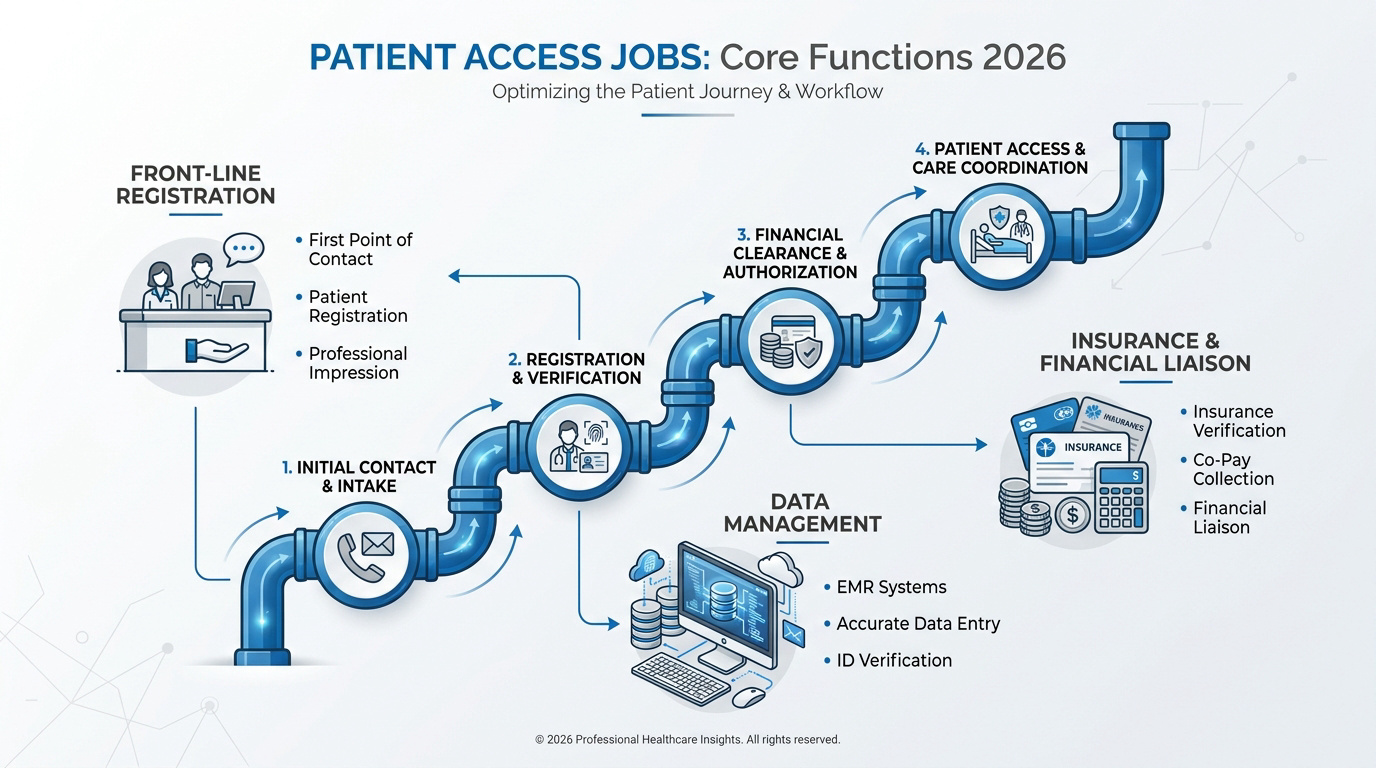
Beyond Greeting: Insurance and Financial Liaison Duties
The job gets technical fast as you verify insurance coverage through provider portals. Confirming active status in real-time is vital for the clinic’s revenue cycle and patient eligibility.
You also act as a financial liaison. This involves explaining billing policies to stressed patients and collecting co-pays or deductibles at the time of service. Clarity here is paramount for trust.
Transparency is everything. By balancing daily receipts and discussing costs openly, you settle the financial dust. This allows the patient to focus entirely on their medical consultation without looming money worries.
3 Key Realities of the Daily Clinic Hustle
While the administrative tasks are technical, the actual daily rhythm of the clinic requires a high level of organizational stamina and adaptability.
Managing High-Volume Intake and Waiting Areas
Hospitals and urgent care centers are high-volume machines. The representative coordinates patient flow constantly. They ensure the lobby stays professional and orderly despite the crowd.
Monitoring wait times is a non-negotiable duty. Front desk staff communicate delays to everyone waiting. This transparency manages expectations and actively reduces patient anxiety in high-stress zones.
Safety starts in the lobby. An organized waiting area ensures clinical operations run smoothly.
Scheduling Logistics and Handling No-Show Protocols
Managing bookings and cancellations requires total precision. Workflow includes making reminder calls daily. Efficient scheduling maximizes the medical staff’s time and clinic resources.
No-show appointments trigger specific protocols immediately. Missed visits directly impact clinic revenue negatively. Representatives follow strict procedures for re-scheduling patients who fail to arrive.
Flexibility meets strict policy here. Consistent scheduling keeps the clinic’s heart beating.
EMR Proficiency and the Shift Toward Digital Kiosks
Mastering EMR proficiency is absolutely mandatory. Precise data entry is non-negotiable for patient safety. Staff must navigate complex software systems during every busy shift.
Digital check-in kiosks are changing the front-end landscape. These tools shift the representative’s role significantly. They now act as a human guide for new technology.
Digital evolution is here. Technology speeds up the process but requires human oversight.
How to Break Into Healthcare Without a Degree?
Mastering the technology is only half the battle; the other half is knowing how to enter the field and leverage your existing skills.
Educational Foundations and CHAA Certification
You only need a high school diploma or GED to start. Entry-level roles prioritize office experience over academic titles. Specialized degrees are often not mandatory for these positions.
The CHAA certification (Certified Healthcare Access Associate) changes the game. This credential boosts career credibility significantly. It shows a real commitment to professional standards in patient access.
Certifications often lead to higher pay. It is a smart investment for beginners.
Transitioning from Customer Service to Healthcare Admin
Retail or hospitality skills translate perfectly to the medical office. Focus on communication and problem-solving. Handling difficult customers is a major asset in a clinic setting.
Building rapport with medical staff and insurance providers is vital. The front desk is the communication hub of the facility. You shift from transactional service to patient care.
A service mindset is invaluable. Patient access is essentially high-stakes customer service.
The Power of Empathy in High-Stress Environments
You must show empathy when dealing with sick patients. Patients are often at their worst when checking in. Staying calm under pressure is a requirement.
Conflict resolution techniques keep the reception area running smoothly. Learn how to de-escalate frustrated individuals quickly. A soft touch often solves hard administrative problems.
Emotional intelligence is a core skill. It differentiates a good rep from a great one.
Salary Perks and Long-Term Career Mobility
Beyond the daily challenges and required skills, the financial rewards and growth opportunities make this career path a strategic choice.
Compensation Packages and Healthcare Benefit Realities
Hospitals offer stable, long-term security for staff. Benefit packages typically include health insurance and 401k plans. These comprehensive healthcare benefits provide essential peace of mind for employees.
Shift differentials increase pay for non-traditional hours. Working nights or weekends significantly boosts total take-home pay. Various shift schedules also offer great flexibility for your personal life.
Entry-level pay remains very competitive. It provides a solid foundation for financial growth.
Moving Up: From Representative to Management
Experience leads directly to leadership opportunities. You can advance to Patient Access Supervisor or Coordinator roles. These positions involve overseeing larger teams in busy hospital departments.
The Patient-Centered Medical Home (PCMH) model offers a collaborative environment. This setting fosters rapid professional development. Data analysis also plays a major role in team growth.
This is a career, not just a job. The ceiling is higher than most think.
Differences Between Access Roles and Medical Assistants
Patient Access focuses strictly on data and finance. This administrative role differs from the clinical tasks of a Medical Assistant. It is a distinction between office and clinical support.
Precise data allows doctors to focus on treatment. The Access role supports clinical efficiency through accurate registration. Synergy between the front and back office is vital.
Administrative foundations are vital for success. Without accurate access, clinical care suffers.
Patient access jobs bridge the gap between clinical care and financial stability by mastering insurance verification and EMR proficiency. By securing CHAA certification and leveraging service skills, you can ensure seamless healthcare delivery. Start your journey today to transform patient experiences and unlock long-term career mobility in this vital field.
FAQ
What exactly does a Patient Access Representative do on a daily basis?
A Patient Access Representative serves as the essential first point of contact in a healthcare facility. Their daily role involves greeting patients, managing the registration process, and ensuring that all demographic and insurance information is accurately entered into Electronic Health Record (EHR) systems. They act as a vital bridge between clinical care and the administrative side of medicine.
Beyond the front desk, these professionals coordinate patient flow, schedule appointments, and manage waiting areas to ensure the clinic operates smoothly. By balancing high-volume intake with meticulous data entry, they prevent future billing errors and help maintain a professional, organized environment for both patients and medical staff.
Is it possible to start a career in Patient Access without a specialized degree?
Yes, it is entirely possible to break into this field without a specific healthcare degree. Most entry-level positions require a high school diploma or GED as the foundational educational requirement. Employers highly value candidates with strong backgrounds in general office administration, retail, or hospitality due to their transferable communication and problem-solving skills.
To boost your credibility and earning potential, you can pursue the Certified Healthcare Access Associate (CHAA) credential. This certification demonstrates a commitment to professional standards and can often lead to higher pay and faster advancement into supervisory roles, making it a smart investment for those just starting out.
How does this role handle patient insurance and financial discussions?
Patient Access professionals act as a crucial financial liaison by verifying insurance coverage in real-time through provider portals. They confirm eligibility, check for active status, and explain complex billing policies, including co-pays and deductibles, to patients before services are rendered. This transparency helps build trust and ensures the clinic’s revenue cycle remains healthy.
In addition to verification, they are responsible for collecting payments at the point of service and balancing daily receipts. By providing clear cost estimates and resolving insurance discrepancies early, they prevent payment denials and allow the clinical team to focus entirely on patient treatment.
What are the primary skills needed to succeed in a high-stress clinic environment?
Success in this role requires a blend of technical proficiency and high emotional intelligence. EMR proficiency and fast, accurate data entry (often targeted at 40 words per minute) are non-negotiable for maintaining patient safety. Additionally, a strong grasp of medical terminology and HIPAA privacy regulations is essential for handling sensitive health information responsibly.
On the interpersonal side, empathy is a core skill. Representatives must stay calm under pressure while assisting anxious or sick patients. The ability to de-escalate frustrations and manage a busy lobby with a service-oriented mindset differentiates a good representative from a great one in a high-stakes healthcare setting.
What kind of salary and career growth can I expect in Patient Access?
The compensation for Patient Access roles is competitive, with wages varying by region, experience, and facility type. Most positions are non-exempt, meaning they are eligible for overtime pay. Furthermore, hospital-based roles often provide comprehensive benefit packages, including health insurance, 401(k) plans with employer matching, and tuition assistance for continued professional development.
Career mobility in this field is significant. With experience, a representative can move into specialized roles like Insurance Specialist or advance to management positions such as Patient Access Supervisor. Because these roles provide a deep understanding of healthcare operations, they serve as an excellent springboard for long-term careers in healthcare administration or revenue cycle management.
How is technology like AI changing the Patient Access role?
Technology is shifting the role from manual data entry to one of technical oversight and patient guidance. Tools like AI-powered “Patient Access Curators” now help identify and correct data errors in real-time, which reduces administrative burdens and prevents claim denials. Digital kiosks and mobile check-in platforms also allow patients to register more conveniently, changing the representative’s focus toward assisting patients with these digital tools.
While automation handles repetitive tasks, human oversight remains critical. Patient Access professionals use these digital tools to provide more accurate financial estimates and to analyze clinic flow, ensuring that technology enhances the human connection rather than replacing it.
FAQ
What exactly does a Patient Access Representative do on a daily basis?
A Patient Access Representative serves as the essential first point of contact in a healthcare facility. Their daily role involves greeting patients, managing the registration process, and ensuring that all demographic and insurance information is accurately entered into Electronic Health Record (EHR) systems. They act as a vital bridge between clinical care and the administrative side of medicine.
Beyond the front desk, these professionals coordinate patient flow, schedule appointments, and manage waiting areas to ensure the clinic operates smoothly. By balancing high-volume intake with meticulous data entry, they prevent future billing errors and help maintain a professional, organized environment for both patients and medical staff.
Is it possible to start a career in Patient Access without a specialized degree?
Yes, it is entirely possible to break into this field without a specific healthcare degree. Most entry-level positions require a high school diploma or GED as the foundational educational requirement. Employers highly value candidates with strong backgrounds in general office administration, retail, or hospitality due to their transferable communication and problem-solving skills.
To boost your credibility and earning potential, you can pursue the Certified Healthcare Access Associate (CHAA) credential. This certification demonstrates a commitment to professional standards and can often lead to higher pay and faster advancement into supervisory roles, making it a smart investment for those just starting out.
How does this role handle patient insurance and financial discussions?
Patient Access professionals act as a crucial financial liaison by verifying insurance coverage in real-time through provider portals. They confirm eligibility, check for active status, and explain complex billing policies, including co-pays and deductibles, to patients before services are rendered. This transparency helps build trust and ensures the clinic’s revenue cycle remains healthy.
In addition to verification, they are responsible for collecting payments at the point of service and balancing daily receipts. By providing clear cost estimates and resolving insurance discrepancies early, they prevent payment denials and allow the clinical team to focus entirely on patient treatment.
What are the primary skills needed to succeed in a high-stress clinic environment?
Success in this role requires a blend of technical proficiency and high emotional intelligence. EMR proficiency and fast, accurate data entry (often targeted at 40 words per minute) are non-negotiable for maintaining patient safety. Additionally, a strong grasp of medical terminology and HIPAA privacy regulations is essential for handling sensitive health information responsibly.
On the interpersonal side, empathy is a core skill. Representatives must stay calm under pressure while assisting anxious or sick patients. The ability to de-escalate frustrations and manage a busy lobby with a service-oriented mindset differentiates a good representative from a great one in a high-stakes healthcare setting.
What kind of salary and career growth can I expect in Patient Access?
The compensation for Patient Access roles is competitive, with a median hourly wage around $17.90 as of May 2024. Most positions are non-exempt, meaning they are eligible for overtime pay. Furthermore, hospital-based roles often provide comprehensive benefit packages, including health insurance, 401(k) plans with employer matching, and tuition assistance for continued professional development.
Career mobility in this field is significant. With experience, a representative can move into specialized roles like Insurance Specialist or advance to management positions such as Patient Access Supervisor. Because these roles provide a deep understanding of healthcare operations, they serve as an excellent springboard for long-term careers in healthcare administration or revenue cycle management.
How is technology like AI changing the Patient Access role?
Technology is shifting the role from manual data entry to one of technical oversight and patient guidance. Tools like AI-powered “Patient Access Curators” now help identify and correct data errors in real-time, which reduces administrative burdens and prevents claim denials. Digital kiosks and mobile check-in platforms also allow patients to register more conveniently, changing the representative’s focus toward assisting patients with these digital tools.
While automation handles repetitive tasks, human oversight remains critical. Patient Access professionals use these digital tools to provide more accurate financial estimates and to analyze clinic flow, ensuring that technology enhances the human connection rather than replacing it.